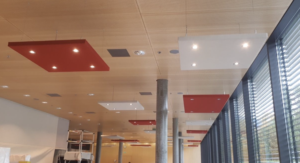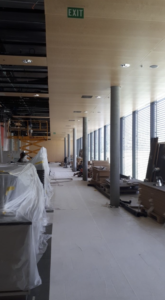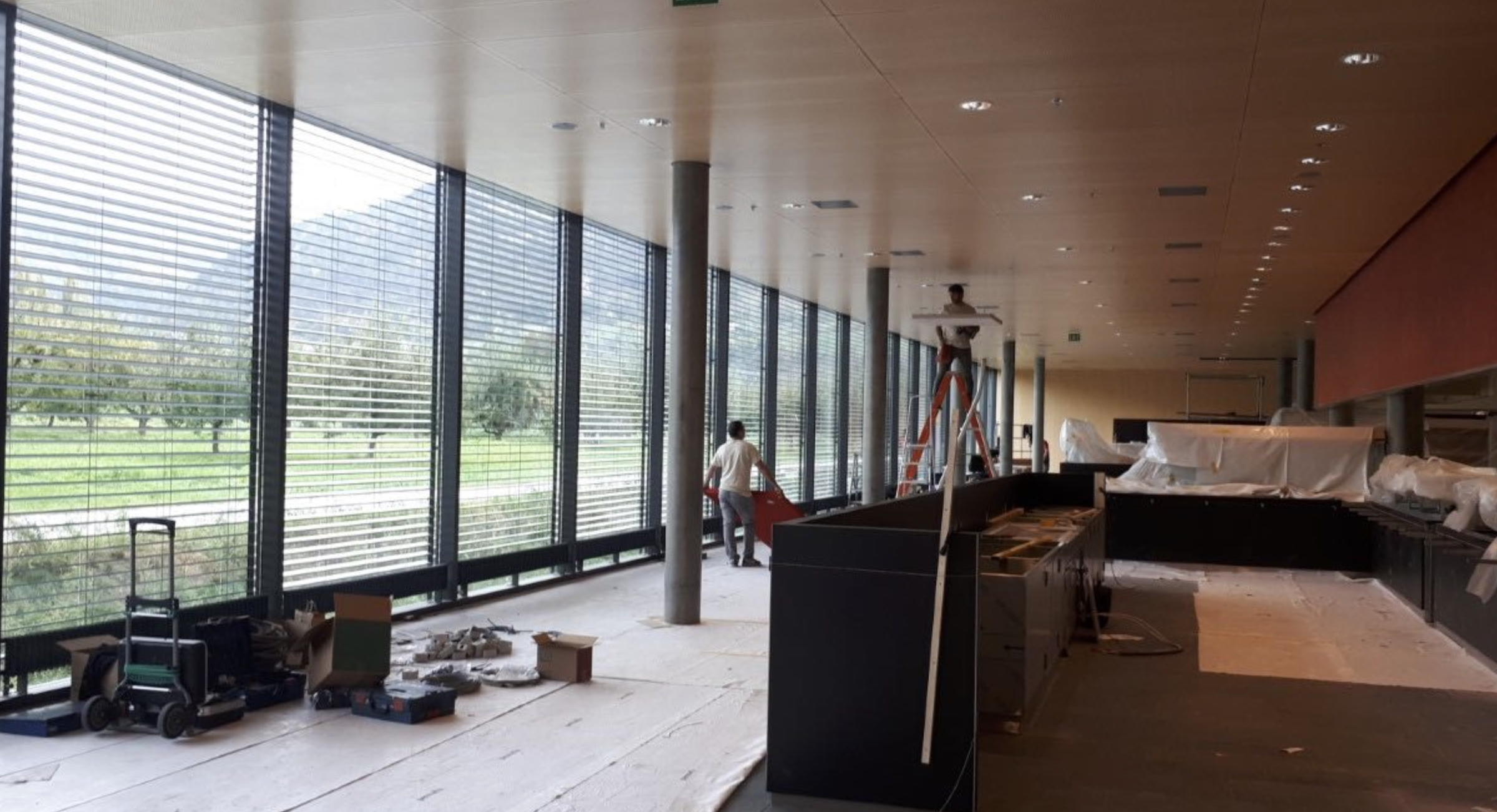



In large spaces, particularly public areas, acoustics are an important consideration, yet one that is all too often overlooked. This is perhaps even more true when the public space is a communal dining area in a healthcare facility. Atelier Guggisberg's expertise and craftsmanship were brought to bear on a hospital canteen acoustic renovation project, in a space shared by patients, staff and other visitors. This hospital canteen acoustic renovation perfectly illustrates the importance of providing acoustic comfort tailored to the specific needs of each environment.
A major and essential project
Atelier Guggisberg was called upon by an architect specialising in the design and refurbishment of commercial kitchens. The project involved the acoustic renovation of a hospital canteen, a multifunctional space used not only for meals but also for other group activities.
The room, fitted with a suspended wooden ceiling, suffered from reverberation problems that caused discomfort for its users. Located at the heart of a hospital, the canteen welcomed patients, visitors and staff every day, making a targeted intervention essential to improve acoustic comfort and quality of life.
One Space, Two Uses: Acoustic Renovation of a Hospital Canteen
As a catering space, the area was separated into two, one used by hospital staff and the other by patients. Between the two, a central kitchen island.
Outside of meal times, it could be used as a conference room by the management.
The needs
In addition to improving the acoustics of the premises, this project included the renovation of the lighting. This part required the installation of several groups of 4 spotlights each by certified electricians.
Due to the dual use of the collective catering space (reception for meals and conference room), we based the stage of our work on an architectural plan designed to improve the acoustics by absorbing the sound:
- Above the self-service island, an area with concentrated noise caused by diners placing their plates on meal trays and the movement of stainless steel trolleys;
- Above the tables;
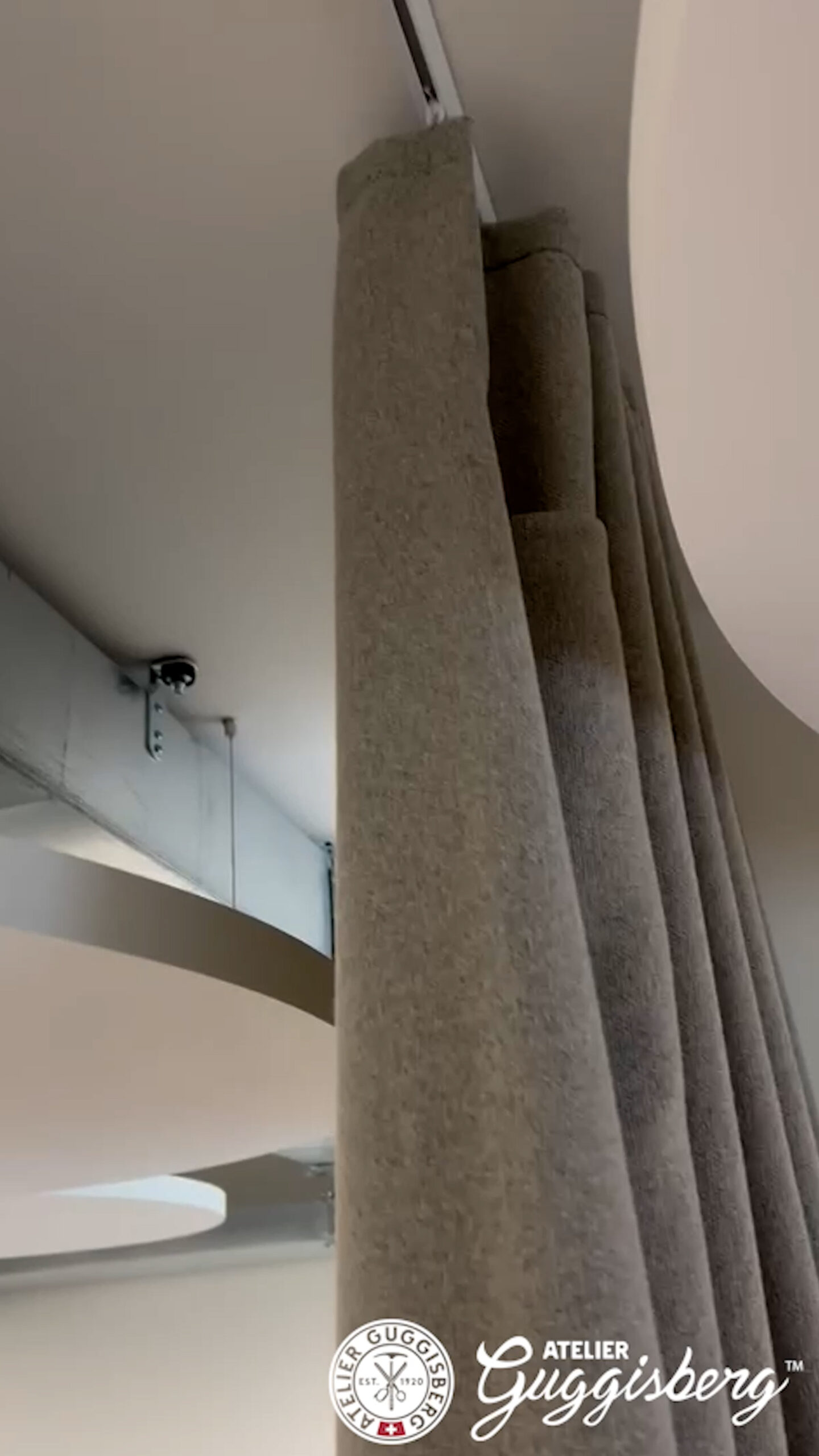
- To ensure privacy during conferences, we also installed mobile acoustic partitions on castors, allowing the conference areas to be arranged flexibly.
The preferred solutions
For the restoration aspect: we treated the existing false ceiling. For this, in accordance with the architect's plans, we occupied the entire surface above the central kitchen island. The Atelier Guggisberg used acoustic fabric and soundproofing materials.
For the restoration aspect: we treated the existing false ceiling. For this, in accordance with the architect's plans, we occupied the entire surface above the central kitchen island. The Atelier Guggisberg used acoustic fabric and soundproofing materials.The techniques used
One of the main challenges of this acoustic renovation project is the wooden false ceiling! How do you attach the cable suspension system, carabiners etc. to such a surface? At the end, acoustic foam, 1 x 1 m and sometimes 1 x 2 m acoustic fabrics.
We opted for a bespoke acoustic frame, made in Rolle from Swiss wood. This design ensures a sturdy, reliable result perfectly suited to the project's requirements. The cost also remained highly competitive compared with industrially manufactured solutions.
A reminder of the importance of acoustics in the hospital environment
In a hospital setting, a quiet acoustic environment improves patients' sleep and strengthens their immune systems. Better rest supports recovery and contributes to a faster convalescence. Staff also benefit from clearer communication, reducing errors and improving performance.
Noise in catering is a public health issue
Noise levels in restaurants generally reach 80 decibels, or even 110 dB in some establishments, compared with 55 to 65 dB, ideally. The effects are immediate: customers and staff have to raise their voices to communicate. Added to this are the sounds of cutlery, trolleys and other equipment, contributing to fatigue and irritability. Not to mention noise pollution when the sound spreads to surrounding areas.
The result?
A completely successful acoustic renovation and a client delighted with the result. The catering area of this hospital has become quieter and has been rid of its status as a source of noise pollution!